

About the Service
COMPLETE DIABETES FOOT CARE AT HOME
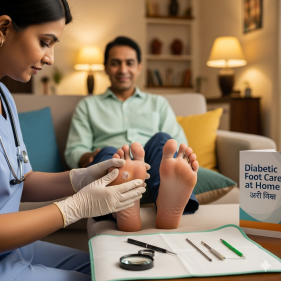
IDEA Clinics brings you a specialized Complete Diabetic Foot Care at Home designed to prevent, manage, and treat complications related to diabetes.
1 in 4 people with diabetes will experience foot problems.
1 in 10 people with diabetes develop a foot ulcer.
20% of people who get a foot ulcer eventually require amputation.
Our evidence-based approach with Advanced Diabetic foot care at home ensures early detection, timely treatment, and comprehensive care to protect your feet and restore mobility — all with complete privacy, comfort, and expert medical guidance.
Services Offered
Four consultations with Foot Surgeon and two consultations with endocrinologists in a month
Comprehensive diabetes and microbiology tests
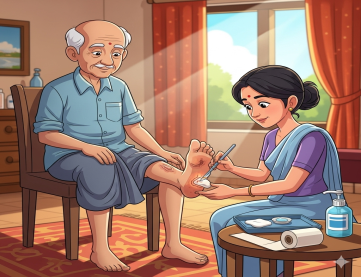
Periodic dressings and debridement at Home
Appropriate antibiotics & Glucose monitoring
Our Treatments


How common are diabetic foot problems?
Why do people with diabetes get foot problems?
What is a diabetic foot ulcer?
A non-healing sore or wound on the foot caused by nerve damage, poor blood supply, and infection
Are foot ulcers dangerous?
Yes. Neglected ulcers can progress to severe infection, gangrene, and even amputation.
Can diabetic foot ulcers be treated at home?
Yes — with expert podiatrist/nurse visits, dressings, debridement, and antibiotics, many ulcers heal safely at home.
How is home care different from hospital or clinic visits?
Home care provides convenience, privacy, and comfort with the same sterile techniques used in clinics — but without waiting times or travel.
How is IDEA Clinics' home care unique and convenient?
Our service provides advanced care with expert wound debridement, targeted antibiotics and infection control, advanced dressings supported with metabolic and diabetes management
Why is blood sugar control important for my feet?
High sugar slows healing and increases infection risk. Keeping sugars in range speeds recovery and protects feet.
How can I prevent diabetic foot problems?
Check your feet daily, wear diabetic footwear, avoid barefoot walking, keep sugars controlled, and get regular podiatrist care.
When should I seek urgent medical help?
If you see spreading redness, pus, swelling, fever, or blackened skin, get immediate care to avoid serious complications.

DIABETIC NEUROPATHY
Diabetic neuropathy is nerve damage caused by long-term high blood sugar.
It often starts with numbness, tingling, or burning in the feet and legs.
Loss of sensation makes foot injuries harder to notice and slower to heal.
Good sugar control can slow or prevent nerve damage.
Daily foot checks and proper footwear help protect against complications.
DIABETIC FOOT ULCERS
A diabetic foot ulcer is a non-healing wound on the foot, common in people with diabetes.
They happen due to poor blood flow, nerve damage, and delayed healing.
Untreated ulcers can quickly lead to infection, gangrene and even amputation.
Early treatment at home with dressings, debridement, and sugar control can save your foot.
Daily foot checks, proper footwear, and not walking barefoot are the best ways to prevent ulcers.
COMPLETE DIABETIC FOOT CARE AT HOME
Expert Consultations
Get 4 visits from a Foot Surgeon and 2 consultations with an Endocrinologist every month, ensuring both your wound and diabetes are managed together.
Comprehensive Testing
Receive diabetes, metabolic, neuropathic, vascular, and microbiology tests at home for early detection and targeted treatment.
Advanced Wound Care
Regular dressings and debridement at home with sterile techniques to speed up healing and prevent infection.
Infection & Sugar Control
Appropriate antibiotics, glucose monitoring, and lifestyle guidance to keep infections under control and improve healing.
Save Limbs, Save Lives
With early detection, continuous care and expert monitoring at home, IDEA Clinics reduces hospital admission.